
2024 ESG Trends Outlook: Four Key Issues Set the Tone for Corporate Strategy
At the start of 2024, the ESG field presents four major trends: beyond climate disclosure rules, the U.S. Securities and Exchange Commission (SEC) will advance regulations on human capital disclosure and ESG investment practices; diversity, equity, and inclusion (DEI) issues continue to gain influence in corporate strategy but face political backlash; investors and legislators are contending over shareholder rights; and climate finance will prioritize physical assets and emerging markets.
The new year has arrived, offering a fresh perspective on the dominant issues in the ESG field. Although the overall landscape has not changed much compared to ESG Dive's earlier initial assessment of trends impacting corporate strategy, several new themes have emerged.
Over the past quarter, market attention has focused on the U.S. Securities and Exchange Commission (SEC), awaiting the final version of its climate disclosure rule. The rule was originally scheduled for release in October 2023, but the SEC has announced it will finalize this long-awaited rule in April 2024. However, the climate disclosure rule is not the only ESG regulatory matter on the SEC's agenda this year.
Beyond sustainability initiatives, the growing wave of opposition has not prevented diversity, equity, and inclusion (DEI) programs from expanding their influence in corporate strategy. Meanwhile, a contest is unfolding among corporations, shareholder advocacy groups, and state and federal lawmakers over what shareholders should be allowed to demand of companies.
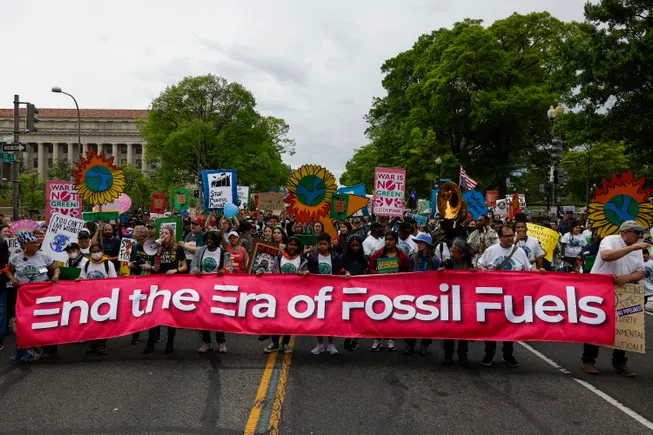
Late last year, global governments reached a landmark agreement at COP28 in the United Arab Emirates, calling for a "transition" away from fossil fuels. With the public disputes over wording with oil-producing nations now in the past, climate finance markets are closely watching these agreements and preparing to direct funds toward this transition.
While our previous observations still apply, here are the most important emerging trends impacting corporate ESG practices in 2024.
Climate disclosure rule is not the only ESG regulation on the SEC's agenda
As companies nationwide prepare for the SEC's long-awaited climate disclosure rule—designed to hold companies accountable for their sustainability practices—they must also consider other upcoming ESG-related regulations from the agency.
The SEC's 2024 regulatory agenda also unveiled other rules that will affect how companies disclose information related to their social and sustainability practices.
Chief among these is an update to the Human Capital Management Disclosure Rule, which would require companies to disclose information on temporary and contract workers, employee turnover data, employee compensation and benefits information, workforce health and safety information, and demographic data. The rule, also scheduled for release in April, additionally proposes to include a specific definition of the term "human capital" so that companies follow uniform standards when disclosing their respective human capital data.
This update was unanimously approved by the SEC's Investor Advisory Committee last fall and was praised by Democratic lawmakers as "helpful for investors to understand how companies treat their most critical asset—their employees." Last month, some senators even called on the SEC to expedite the release of the rule.
The SEC's 2024 agenda also shows that the proposed Enhanced Disclosure Rule on ESG Investment Practices for Investment Advisers and Investment Companies has entered its final stage and is expected to be issued in April as well, making April a significant month for ESG observers. The rule, initially published in the Federal Register in June 2022, would require investment companies and advisers that promote ESG funds to specify how ESG factors actually influence and guide the investment strategies of these funds.
Other notable items are expected later in October of this year, including a proposal to increase disclosure of diversity among corporate board members and nominees.
These regulations and proposals indicate that while all eyes may be on the SEC's climate disclosure rule, environmental legislation is not the agency's only priority in ESG reporting.
Moreover, companies and asset managers now not only know the release date of the climate disclosure rule but also have a stronger vested interest in it. SEC Chair Gary Gensler said in December that without the agency's climate disclosure rule, stricter EU climate disclosure regulations would take precedence.
DEI debate gains influence in corporate ESG reporting strategies
Diversity, equity, and inclusion (DEI) initiatives have recently become a focal point of corporate social strategies, set against the backdrop of the U.S. Supreme Court's 2023 rejection of affirmative action in college admissions and its 2022 overturning of Roe v. Wade.
These developments have prompted companies across the country to disclose their policies on healthcare and diversity, not only to be more transparent with employees but also to respond to growing investor concerns. The architecture of corporate ESG reporting—historically more focused on sustainability measures and performance—has evolved over time to include policies and goals companies have adopted to better address the "S" component.
For example, Kroger, the supermarket chain giant headquartered in Cincinnati, Ohio, initially categorized the social or "people pillar" portion of its ESG policy under themes such as food access, health and safety, and "inclusive economy," but its latest ESG report did not directly mention employee reproductive healthcare and abortion access programs. However, after the Supreme Court eliminated constitutionally protected abortion rights, the grocer said in a June 2022 statement that it would cover some out-of-state travel expenses for employees due to abortion procedures as part of its corporate healthcare and benefits coverage.
"Companies can no longer avoid politics... nor hide behind the scenes," Yinka Faleti, a former Missouri Secretary of State candidate and venture capitalist, told ESG Dive. "They must take a stand."
Faleti said that while in the past most companies' natural inclination was to remain apolitical, "the dual waves of the George Floyd movement and the pandemic" have completely changed the landscape. He believes this shift has led to companies being asked to disclose their positions on LGBTQ issues, DEI, and even abortion.
Additionally, Faleti said the growing demand for transparency on corporate social and welfare issues is partly driven by a new generation of employees. He said millennials, Generation Z, and subsequent generations want to understand the values of the companies they work for or plan to join and assess whether those values align with their own on "most things."
Beyond the social policies implemented by companies themselves, the importance of DEI initiatives at the state level is also rising, with left-leaning states like California introducing legislation to push for more DEI disclosures. Last year, Governor Gavin Newsom signed Senate Bill 54, requiring venture capital companies headquartered in California or with significant operations there to annually report the number of diverse founders they invest in and disclose data on race, sexual orientation, gender identity, disability, and veteran status.
SB 54 follows SB 1162, a pay transparency law passed in 2022 aimed at promoting gender equality and protecting women's rights. Both California bills advocate for more social data disclosure, which experts say is crucial when discussing corporate compliance with their DEI policies and goals.
Despite the increased importance of DEI in the corporate world, it has not been without backlash following the Supreme Court's ruling on affirmative action.
Shortly after the court's decision, Republican attorneys general from 13 states sent a letter in July to CEOs of all Fortune 100 companies—including Microsoft, Walmart, and PepsiCo—warning them against hiring, promoting, and contracting "in the name of 'diversity, equity, and inclusion.'"
The letter aimed to signal to corporate executives and boards that DEI programs are under scrutiny, stating that such practices "involve racial discrimination" and could face serious legal consequences. Experts have expressed concerns about what the Supreme Court's ruling means for DEI in the corporate environment, with some predicting that, in the long term, it could even stall diversity efforts at certain companies.
Investors and lawmakers contest over shareholder rights
Last year's activities brought the ESG battle to the proxy voting stage, where shareholders saw diminishing returns, with the year including a record number of ESG-related shareholder proposals and subsequent proxy votes. Although a large number of unpopular anti-ESG shareholder proposals (which were counted among ESG-related proposals) dragged down support rates, investigations by the House Judiciary Committee majority and Republican attorneys general nationwide also dampened ESG enthusiasm.
In 2023, the Judiciary Committee subpoenaed UN-aligned financial services groups, shareholder advocacy groups, and the largest U.S. asset managers as part of an investigation spanning over a year. Committee Chairman Jim Jordan, an Ohio Republican, said the committee was investigating whether climate alliances and shareholder advocacy groups were violating antitrust laws.
In the view of Jordan and the committee majority, such industry climate groups represent such a large share of market capitalization in an industry that the group could use its influence to force companies to do things they would not otherwise do.
"Companies are collectively adopting and imposing left-wing environmental, social, and governance (ESG)-related goals, and (net-zero alliance industry groups) appear to facilitate collusive behavior that may violate U.S. antitrust laws," Jordan wrote in a November subpoena to the Glasgow Financial Alliance for Net Zero.
Similar subpoenas have also been issued by a coalition of Republican attorneys general across the country, also alleging that companies involved in ESG and climate alliances violate antitrust laws.
Josh Zinner, CEO of the Interfaith Center on Corporate Responsibility (ICCR), told ESG Dive that there is no "valid legal basis" for claims that collaborative investor actions violate antitrust laws.
"(These allegations) are being used as a club by political opponents in Congress and red-state attorneys general to intimidate those pushing for positive progress on climate and other ESG issues," Zinner said.
Heidi Welsh, executive director of the Sustainable Investments Institute, noted that an underreported aspect of the proxy voting season is the volume of interactions between investors and companies regarding proposals that never reach a vote. Welsh said that in such dialogues, companies often reach agreements before proposals are submitted for a vote, or agree and withdraw proposals before voting.
Andrew Behar, CEO of shareholder advocacy group As You Sow (also a recipient of subpoenas), previously told ESG Dive that the House Judiciary Committee and attorneys general issuing similar subpoenas seem not to believe shareholders should have the right to push companies to address material risks.
Although Zinner believes these subpoenas have no legal force—and ICCR did not receive a subpoena from the Judiciary Committee—he expressed concern that the investigations make it more difficult for shareholders to hold companies accountable for their ESG practices.
Climate finance focuses on physical assets and emerging markets
Late last year, the landmark COP28 agreement called on global governments to begin a "transition away" from fossil fuels, but the UN climate body noted that the agreement's true policy implications, including potential accountability measures, will take time to materialize.
For now, climate finance markets will support this transition by directing funds into assessing and adapting physical assets vulnerable to climate change and the net-zero transition, as well as helping developing economies prepare for the transition.
McKinsey & Company estimated last year that approximately $275 trillion (slightly over $10 trillion annually) in physical asset investment would be needed by 2050 to keep global temperature rise within 1.5 degrees Celsius. Thomas Kuh, head of ESG strategy at Morningstar Indexes, told ESG Dive that current funding levels are not on track to achieve this goal.
"The amount of resources currently mobilized has not yet reached the level needed to achieve the goal," Kuh said. "At the same time, I think it's fair to say we are still in the very, very early stages of this process, so it's difficult to assess how much today's actions will help us achieve future goals."
Anya Solovieva, global director of business strategy and climate solutions at Morningstar Sustainalytics, said in an interview with ESG Dive that global investors are increasingly focused on physical and transition risks and want to understand how their portfolios align with net-zero goals.
However, she added that investors have accepted the fact that companies will face some physical risks from climate change, and asset managers have begun to move beyond traditional physical climate risk assessments.
"As we see the increasing frequency and severity of physical climate change manifesting—and also see the outcomes of global commitments—I think investors have now essentially accepted the fact that we are locking in a certain level of physical climate change," Solovieva said.
While traditional risk assessments focus on physical assets such as real estate and infrastructure, Solovieva said companies need to start better understanding the extent to which their portfolios are exposed to climate risk.