
The Fate of Scope 3 Emissions Takes Center Stage: The Final Direction of SEC Climate Disclosure Rules
The climate disclosure rules proposed by the U.S. Securities and Exchange Commission (SEC) in March 2022 have faced strong opposition from Republican lawmakers, industry groups, and multiple state attorneys general due to the requirement for companies to disclose Scope 3 emissions. The rule has received over 16,000 public comments, and the final version is expected to be released in April 2024, but whether the Scope 3 disclosure requirement will be retained remains in question. Experts and companies hold differing views, with some believing Scope 3 may be removed, but even if removed, disclosures of Scope 1 and 2 could still face legal challenges.
In March 2022, the U.S. Securities and Exchange Commission (SEC) proposed climate disclosure rules requiring companies to describe their greenhouse gas emissions levels and strategies to mitigate climate risks in their 10-K filings. The proposal immediately drew criticism from some Republican lawmakers, industry groups, and dozens of state attorneys general.
Criticism focused on the disclosure requirements for Scope 3 emissions. According to the U.S. Environmental Protection Agency (EPA), Scope 3 emissions are not directly produced by the company, nor do they come from assets owned or controlled by the company, but rather from related entities in its value chain or supply chain. Although companies do not directly produce these emissions, Scope 3 emissions typically account for the majority of their total greenhouse gas emissions.
Since the proposal was published, the SEC has received over 16,000 public comments, leading the agency to delay the final rule multiple times, most recently missing the expected October release date. Last month, the SEC stated it plans to finalize the rule by April 2024, but did not disclose the specifics of the final version or whether it would revise the Scope 3 disclosure requirements.
Given the backlash, experts and some companies doubt whether the Scope 3 requirement will ultimately survive.
Why is Scope 3 controversial?
The SEC's initial proposal required companies to disclose Scope 3 emissions 'if material, or if the registrant has set a greenhouse gas emissions reduction target that includes Scope 3 emissions.' The SEC stated that such disclosures would provide investors with useful information to assess companies' 'climate-related risk exposure and management, particularly transition risks,' but also noted that smaller reporting companies would be exempt from this requirement.
The proposal is not far removed from existing global disclosure requirements; for example, the EU's Corporate Sustainability Reporting Directive (CSRD) has broader Scope 3 reporting requirements, and California's disclosure laws also mandate Scope 3 reporting. However, this has not shielded it from critics' attacks. Opponents argue that the requirement imposes a heavy burden on companies, requiring disclosure of information that is not material to investor decisions, and extends the SEC's authority beyond its congressional mandate.
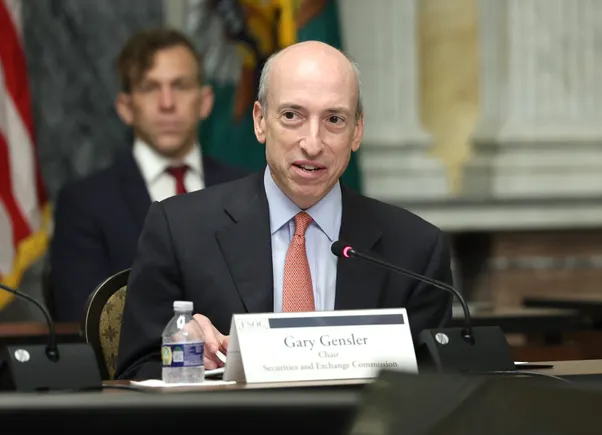
In June 2021, organizations such as the Western Energy Alliance and the American Petroleum Institute wrote to SEC Chair Gary Gensler, asking whether the SEC has congressional authority 'to regulate in the area of climate disclosure' and the implications if it attempts 'aggressive regulation in this area.' The letter stated: 'Compared to mature financial disclosure, climate and ESG reporting is still in its infancy, and competitive systems should be allowed to develop before the federal government imposes bureaucratic constraints.' The letter also urged the SEC not to exceed its mandate to protect investors and facilitate capital formation.
Texas Attorney General Ken Paxton, in a letter joined by 12 other attorneys general in June 2022, echoed these views in opposition to the rule. Paxton called the climate rule 'flawed,' particularly regarding Scope 3 emissions disclosure, because the requirements 'cannot provide investors with consistent and reliable information.' He claimed that Scope 3 reporting requires companies to 'collect information from a wide range of sources, including data on the transportation, distribution, processing, use, and disposal of company products,' and that such data may be less accurate. He wrote: 'The reliability of Scope 3 greenhouse gas emissions reporting is also questionable, making statements that include Scope 3 potentially harmful to investors that the SEC is supposed to protect.'
After receiving significant feedback of this nature, the SEC indicated it would seek to avoid overstepping its authority when finalizing the climate risk rule. Gensler told the U.S. Chamber of Commerce in October: 'We did receive a lot of feedback that these estimates could lead companies to request forms and numbers from their supply chains, etc. So, the staff is looking at how we can ensure we don't indirectly do what we cannot do directly—we do not regulate private companies.'
Next Steps: The Fate of Scope 3
Although some companies oppose any form of climate disclosure requirements, many believe the SEC's proposal aligns with existing disclosure rules in the EU and the U.S., such as California's climate risk regulations implemented through Senate Bills 253 and 261.
Renee Morin, Chief Sustainability Officer at eBay, told ESG Dive: 'For eBay, we have no qualms about disclosing emissions because we have been doing it all along. I think the real issue is that there are multiple workstreams globally and domestically.' However, Morin noted that eBay, along with companies like Amazon, Facebook, Salesforce, and Intel that already voluntarily disclose climate data, provided public comments to the SEC on what works and what doesn't, particularly around Scope 3 emissions reporting.
In a June 2021 letter, these companies stated: 'Given that climate disclosure relies on estimates and assumptions that involve inherent uncertainties, it is important not to subject companies to undue liability, including liability from private parties. Additionally, reporting deadlines should allow sufficient time for companies to collect and verify information obtained from third parties.'
The lengthy finalization process has left some companies uncertain whether the Scope 3 disclosure requirement will be included in the final version of the SEC's climate disclosure rule. Mark Stach, Chief Services Officer at Sphera, told ESG Dive: 'At this point, it is uncertain whether reporting of companies' indirect emissions from suppliers (i.e., Scope 3) will be included in the final rule. I don't think it's a done deal.' Erin Martin, a partner at ESG and sustainability consulting firm Morgan Lewis, also predicted that the general consensus among experts is that Scope 3 'may be cut.' Martin, who worked in the SEC's Division of Corporation Finance for over a decade, said Scope 3 remains 'one of the significant areas of concern regarding the ability to implement the necessary policies and procedures to provide such disclosures.' She also noted that there is insufficient infrastructure outside companies to record and provide high-quality data about companies' value chains. But she added that even if Scope 3 is excluded from the final rule, it is unlikely to avoid legal challenges. Martin said: 'Even if Scope 3 is no longer in the final rule... I think there will still be significant opposition to Scope 1 and Scope 2.'