
Opinion

Three legal challenges to building a global carbon market for companies
The global carbon market is entering a critical phase, with governments expanding carbon pricing schemes, companies pursuing emission reduction targets, and the Paris Agreement supporting cross-border transfers of carbon assets. However, the legal infrastructure underpinning this market remains fragmented. Carbon credits are increasingly flowing across borders, but the laws governing their creation, ownership, transfer, and use remain confined to the national level. Regulators are also scrutinizing environmental claims involving carbon credits. Companies should focus on three major issues: the legal status and ownership of carbon credits, environmental integrity and accounting and claims risks, and the allocation of regulatory and performance risks in carbon contracts.

Pulling back from DEI increases legal risk — and costs organizations qualified women
Under political and social pressure, many organizations are scaling back diversity, equity, and inclusion (DEI) initiatives, believing this reduces risk, but it may backfire. The U.S. Equal Employment Opportunity Commission (EEOC) continues to enforce anti-discrimination protections for women, and recent settlement cases show that compliance obligations have not changed. This article analyzes the relevant legal risks and proposes eight best practices based on EEOC guidelines to help HR leaders build equitable workplaces.

Disclosing corporate sustainability progress in a divided regulatory landscape
Global sustainability disclosure requirements are evolving at unprecedented speed, breadth, and political variability, with policy divergence at the U.S. federal and state levels, simplification of rules in the EU, and adoption of unified frameworks by multiple countries. Facing a fragmented regulatory environment, companies should treat reporting as a value-adding capability rather than a compliance burden, orienting toward stakeholder needs and establishing third-party assured disclosure systems to enhance resilience, optimize decision-making, and gain competitive advantage.

Circular technology: Where ESG goals and commercial performance come together
The second-hand technology market is expected to reach $262 billion by 2032. Companies need to shift the circular economy from a reporting obligation to a strategic core to balance sustainability and profitability.
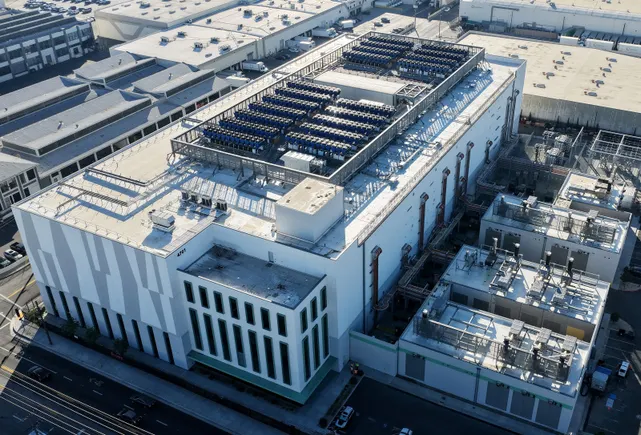
How data center demand can accelerate climate tech deployment
This article explores how growing data center demand can act as a catalyst for the large-scale deployment of climate technologies. Through principles such as project co-location, energy park development, and operating during surplus grid periods, data centers and climate technologies can mutually benefit, improving project economics and accelerating the clean energy transition.
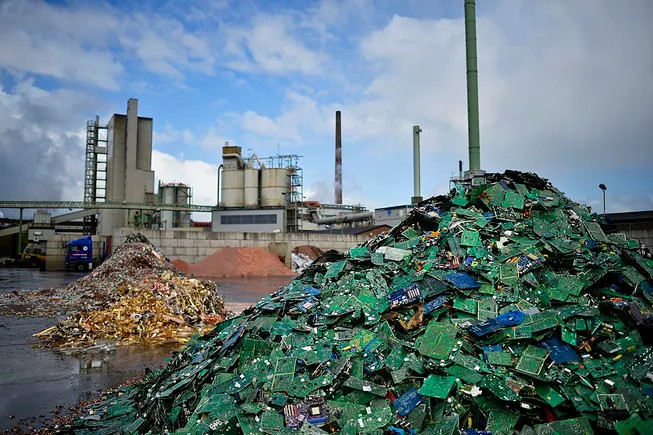
Hidden net-zero infrastructure: How advanced waste filtration supports the circular economy
As 'invisible infrastructure,' advanced filtration technology is solving the recycling challenges of complex waste streams such as smartphone screens, aviation fuel, and electric vehicle batteries. This article, from the perspective of Pall Corporation experts, explores the application of this technology across five key industries, demonstrating how it achieves circular economy benefits without compromising product performance.

Are US public pensions investing in real climate solutions?
U.S. public pensions remain insufficient in addressing climate risks. The Sierra Club analysis points out that most large pensions lack clear strategies to direct capital toward climate solutions, and there are issues such as greenwashing and an overemphasis on clean energy.
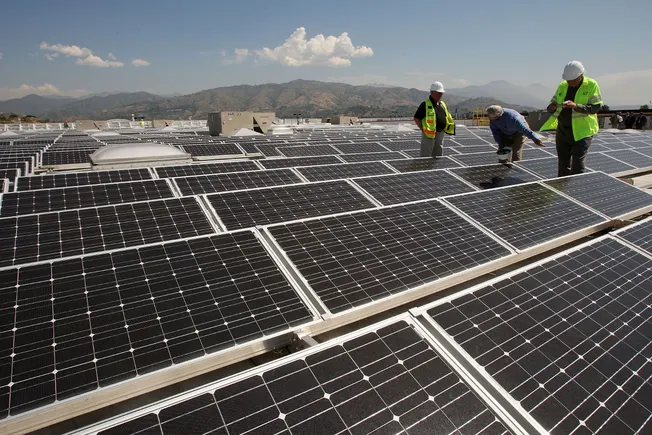
GHG Protocol proposal risks slowing clean energy expansion
The GHG Protocol recently solicited public comments on revisions to its Scope 2 guidance, proposing to require hourly matching for renewable energy purchases and tighten geographic boundaries. While the proposal aims to improve accounting accuracy, it could undermine the voluntary clean energy market, suppress corporate demand, and slow the development of wind and solar projects in the United States.

Rooftop solar is booming, but not in the communities that need it most
U.S. solar installations are growing rapidly, with 84% of new electricity in 2024 coming from solar and storage, but installations are concentrated in high-income communities. Low-income households have 14.7% higher carbon offset potential yet 47% fewer installations. Despite reduced federal funding, states like California and Massachusetts are still rolling out subsidies and community solar projects, which, combined with tools like GeoAI, could enable a fairer energy transition.
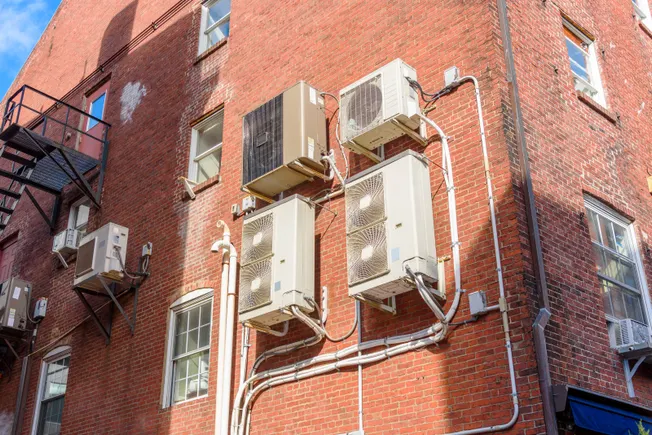
Hybrid heating: A bridge to decarbonization or a road to obsolescence for gas utilities?
As building electrification advances, pressure on winter grid peaks increases, making hybrid heating (air-source heat pumps plus gas furnaces) an option that balances decarbonization and reliability. However, its long-term role depends on regulatory incentives, cost recovery mechanisms, and data availability. The article notes that, if poorly designed, hybrid heating could accelerate the stranding of gas infrastructure rather than facilitate a smooth transition.