
Biodiversity becomes a new ESG focus for the packaging industry, but measurement standards remain a challenge
In new efforts to mitigate biodiversity loss, packaging industry companies are beginning to consider incorporating this issue into their sustainability plans. But measurement challenges mean that the widespread adoption of such measures—at least for now—is unlikely.
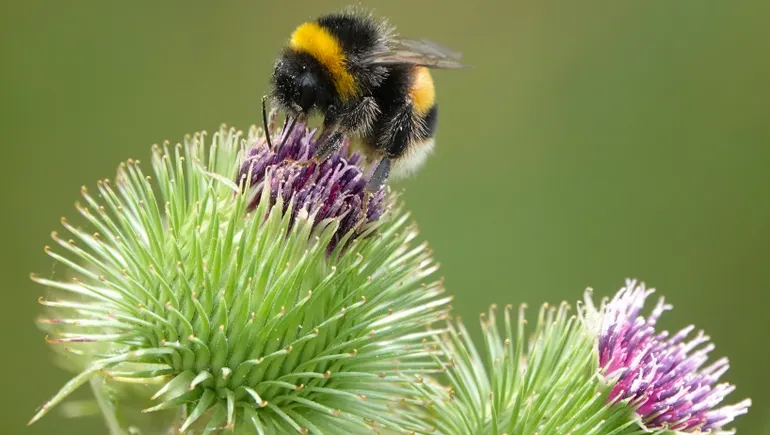
In new efforts to slow biodiversity loss, companies in the packaging industry have begun considering incorporating this issue into their sustainability plans. However, measurement challenges mean that widespread adoption of such measures is unlikely—at least for now.
This rise in interest is largely driven by new international agreements to address the biodiversity crisis. These actions stem from research documenting the alarming decline in global biodiversity—the variety of animals, plants, fungi, and microorganisms on Earth. According to a 2019 United Nations report, about one million species are at risk of extinction.
To curb global plant and animal loss, more than 190 countries signed the Global Biodiversity Framework last year, which calls for restoring or protecting 30% of land and marine ecosystems by 2030. One of its four goals is to increase financial resources for biodiversity conservation from the private and public sectors. The European Union's Deforestation Regulation, set to take effect later this year, is also driving corporate interest in biodiversity protection.
A 2023 analysis by PwC found that 55% of global GDP—about $58 trillion—is "moderately or highly dependent" on nature. In five industries, including forestry, the economic value of direct operations is highly dependent on nature.
"Companies are recognizing the risks of biodiversity decline," said Healy Hamilton, chief scientist at the Sustainable Forestry Initiative (SFI), which certifies forests managed with an environmental focus. "The science has been very clear," she added, and business leaders also recognize that "nature decline is an economic risk." Through ESG reporting, companies can assess and plan to mitigate risks.
In the paper packaging industry, scrutiny of its biodiversity impact "will only intensify" as demand for its products grows, said Nicole Rycroft, founder and executive director of Canopy Planet, an environmental organization that works with companies on sustainability challenges. About 400 million metric tons of paper and paperboard are produced globally each year—and demand is rising, she noted.
"When you have such a large existing footprint, it means the impact on carbon-rich forest ecosystems grows significantly each year," affecting both climate and biodiversity. She said demand is driven mainly by e-commerce, which in some cases requires up to seven times more packaging than in-store purchases, along with a trend of shifting from plastic to paper packaging.
Rycroft said her organization has seen increased interest in its Pack4Good program, in which companies commit to eliminating the use of fiber from "ancient and endangered forests." More than 400 brands have signed on to date, including Ben & Jerry's, Seaman Paper, and Stitch Fix.
"By reducing reliance on forests for packaging fiber—whether consumer-facing or B2B high-quality packaging—companies can significantly reduce their carbon footprint and the biodiversity footprint associated with packaging," Rycroft said.
Emerging ESG focus
Although still far less common in ESG reporting than greenhouse gas emissions, biodiversity is expected to become a key part of these strategies in the coming months and years as companies understand the risks and opportunities. In January, during the World Economic Forum in Davos, Switzerland, 320 packaging companies, including Smurfit Kappa and International Paper, announced commitments to begin nature-related disclosures.
Multiple reports have found that halting the loss of species diversity and abundance is in the best interest of many companies.
For example, an analysis by S&P Global released earlier this year found that 85% of companies in the S&P Global 1200 index are "significantly dependent" on nature. (Although the terms are often used interchangeably, nature refers to the entire natural world—from plants and animals to soil and rocks—while biodiversity refers specifically to the variety of life.) The report also found that 46% of these companies hold at least one asset in important biodiversity areas, which "may face future reputational and regulatory risks."
However, biodiversity commitments still lag far behind climate-related commitments. S&P's global analysis of about 100 companies found that only 22% assessed their value chain's impact on biodiversity, and only 31% took biodiversity-related actions. But this could change soon: 35% said they plan to take action, and 45% reported intending to assess their impact on biodiversity within the next two years.
The slow pace of adoption may be partly attributed to the novelty of international and domestic biodiversity policies. But industry sustainability experts say the unique challenges of measuring biodiversity and reporting biodiversity-related activities also contribute to the lag.
"I think this will be a challenge for everyone," said Outi Marin, head of sustainability reporting at Smurfit Kappa, which supplies cardboard boxes to companies like Unilever, Nestlé, and PepsiCo, and has operating forestlands in Colombia, France, and Spain.
Biodiversity is more challenging than water, for example, which companies already report on. When measuring water quality and quantity, "you get clear results," she said. "But (for) biodiversity, you can't measure from the same location and conclude whether it's good or bad, because species migrate." Additionally, determining which metrics to use is more complex, she added. "It also involves finding metrics that are material to you and being able to express them in a more quantitative way."
Industry experts say the packaging industry's long history of sustainable forestry practices may give it an advantage in global efforts to ensure accountability. Due to intense public and legal scrutiny in the 1980s over the impact of logging in the Northwest on species like the northern spotted owl, many companies have established robust sustainable forestry practices, which they say also protect biodiversity.

For example, forest certification programs, most notably those developed by SFI and the Forest Stewardship Council (FSC), have existed since the 1990s. These programs set standards for forestry practices and verify compliance through independent audits. Some standards already address biodiversity. For instance, SFI's updated forest management standard released in 2022 includes measures to help protect biodiversity, wildlife habitat, water quality, endangered species, and forests with "exceptional conservation value."
"I think they are very closely aligned," said Chris Davison, vice president of sustainability at WestRock, regarding sustainable forestry and biodiversity goals. The company's fiber comes from timber operations certified by SFI, FSC, and two other sustainable forestry certification entities.
In addition to sourcing fiber from sustainably managed forests, WestRock partners with The Nature Conservancy to protect longleaf pine forest habitats in the Southeast, aiming to conserve red-cockaded woodpeckers, northern long-eared bats, and other species. According to its 2022 sustainability report, the company has committed $15 million to support community projects that protect and enhance biodiversity, freshwater resources, and working forests.
Marin noted that Smurfit Kappa—whose pending acquisition of WestRock would make it the world's largest publicly listed packaging company—has 67,000 hectares of forests and plantations in Colombia, all FSC-certified since 2003. About one-third of those 67,000 hectares are designated as "natural forests," and the company is working with local universities to monitor biodiversity there, she added.
Other companies are also taking a closer look at biodiversity and nature conservation, including International Paper and Graphic Packaging International. One goal included in International Paper's 2022 sustainability report is to source 100% of its fiber from sustainably managed forests or recycled fiber while protecting biodiversity.

Standards taking shape
An open question is whether these long-established sustainable forestry and conservation efforts are themselves sufficient to help paper and packaging companies address the new challenges of biodiversity reporting, or whether additional metrics and reporting protocols need to be developed.
Some in the industry point out that existing management standards already support multiple sustainability-related goals. For example, SFI promotes that its recently updated certification standards support nature-based solutions. "Supported by the right policy frameworks, sustainable forest management is a bold but proven approach to addressing multiple global challenges by doing good rather than merely avoiding harm," SFI wrote in a recent sponsored article.
However, for some forest and biodiversity advocates, the best way to protect forest biodiversity—and reduce biodiversity-related corporate risks—is to shift to alternatives to wood fiber. They note that the industry still relies on primary forests.
"Forests have been identified as the cheapest, fastest, and most effective way to stabilize our climate. Of course, you can say the same about biodiversity," Rycroft said. "So there's an overlap in achieving climate goals and biodiversity goals by keeping forests standing. And there's an incredible opportunity to diversify the fiber basket to these next-generation alternatives."
Canopy created the EcoPaper database to help companies find vetted paper and packaging options that do not come from "ancient and endangered forests." The database lists more than 1,100 options, including products using 100% recycled content or alternative fibers such as wheat straw, flax, seaweed, and food waste, as well as some FSC-certified products.
But Rycroft and others say the paper and packaging industry will continue to rely heavily on managed forests for the foreseeable future—and therefore plays a significant role in biodiversity conservation. Hamilton said that getting data collection and measurement protocols right is therefore crucial for building credible biodiversity ESG claims.
Two international efforts aimed at establishing and encouraging the adoption of clear global standards are underway.
One effort by the Taskforce on Nature-related Financial Disclosures (TNFD) aims to provide guidance on what companies should disclose about their impacts on nature and how to report it. In September, TNFD released a set of disclosure recommendations, modeled on those of the Task Force on Climate-related Financial Disclosures (TCFD), focusing on strategy, risk, governance, metrics and targets, and impact management.
The guidance aims to help organizations and companies "report and act on evolving nature-related dependencies, impacts, risks, and opportunities," TNFD said. "These recommendations and guidance will enable business and finance to integrate nature into decision-making and ultimately support a shift in global financial flows from nature-negative outcomes to nature-positive outcomes."
New sector-specific guidance released this month for forestry, as well as agriculture, mining, and other areas, outlines key information to include in assessments that are central to the TNFD protocol.
In another effort, last May, the Science Based Targets Network (SBTN), an alliance of international environmental organizations, published its first nature targets. These targets "provide companies and cities with a clear pathway to competitiveness and resilience by using science to define their role in protecting and restoring nature," the alliance said on its website. "Reversing nature loss in line with science will create a future of resilient businesses, healthy cities, and a sustainable economy."
However, it remains unclear whether paper packaging companies that have already placed sustainability at the core of their operations will feel the need to take additional actions specifically for biodiversity, even if these targets and recommendations may provide clarification.
WestRock has adopted a target to reduce greenhouse gas emissions, validated in 2022 by the Science Based Targets initiative (SBTi), which focuses on emissions—planning to cut emissions by 27.5% by 2030 compared to 2019—but the company has not yet decided whether to add biodiversity- or nature-specific targets, Davison said. WestRock attended some meetings held by SBTN to develop science-based nature targets, Davison said, but it is not one of the 17 companies in the pilot program testing the standards.
However, the company may incorporate biodiversity targets in the future, Davison added. "I think it's fair to say we would certainly consider it."
For now, the standards landscape is not mature enough to accept such targets, he said. Compared to measuring greenhouse gas emissions, assessing biodiversity is "significantly more complex," Davison said.
"So I think, from my perspective, I need to be convinced that the metrics they choose are acceptable within our industry sector, understood by stakeholders... and can be measured with high precision," he said. As the company monitors the development of the nature-based targets landscape, WestRock is exploring supporting additional conservation projects, he added.
Looking across the paper-based packaging industry as a whole, "I think expectations will shift toward having targets—if science-based nature targets get off the ground, and people start becoming more comfortable with them, and it starts gaining similar traction as SBTi has on emissions reduction, I wouldn't be surprised (if) more mature customers start requiring suppliers to set such targets."
In Rycroft's view, it's only a matter of time before the packaging industry embraces the idea of addressing the interconnected challenges of climate change and biodiversity loss—largely because pressure from customers, investors, and regulators will only increase.
"For a long time, at least in the business community, biodiversity definitely took a backseat to carbon and climate," she said. "(But) companies are now more aware of the importance of integrating biodiversity strategies into their work."
Hamilton agrees. "This is not a fad. This is a trend, and it's not going away."