
SEC Rules: Climate Risk Is Financial Risk
The U.S. Securities and Exchange Commission (SEC) recently passed climate disclosure rules by a 3-2 vote, marking the regulator's formal inclusion of climate risk within the framework of financial risk assessment. The rules require large accelerated filers to disclose material Scope 1 and Scope 2 emissions starting in 2027 and to report extreme weather-related costs in audited financial statements starting in 2026. Scope 3 emission requirements were excluded, but other global regulatory frameworks (such as CSRD and ISSB) still mandate such disclosures. Analysts note that despite the ambiguity of the rules, the regulatory trend toward global climate information disclosure is irreversible.
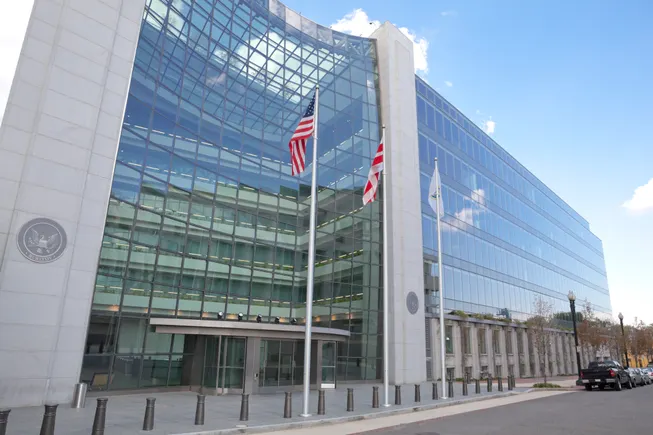
As the costs and risks associated with climate change continue to rise—global natural disaster insurance losses have exceeded$100 billionfor four consecutive years—the link between climate and finance can no longer be ignored. The U.S. Securities and Exchange Commission (SEC), in a 3-2 vote earlier this month,adopted climate disclosure rules, a direct reflection of this reality.
The final rule establishes a clear regulatory stance: requiring companies to disclose their material greenhouse gas emissions, detail climate-related risks, and report plans to mitigate these risks. This new regulation should be viewed as a landmark event—the SEC oversees a capital market system in the U.S. worth approximately $100 trillion, and its ruling signals that investors need consistent, comparable, and reliable information on climate risk impacts to make investment decisions.
What the Rule Includes
First, let's look at what provisions were retained in the final rule.
Greenhouse Gas Emissions Disclosure
Starting in 2027,large accelerated filers—companies with publicly held shares of $700 million or more—must report theirScope 1 and Scope 2 emissionsif they determine these emissions are material. Large accelerated filers account for approximately40% of the roughly 7,000 companies registered with the SEC, and 60% of the 900 foreign issuers. Additionally, accelerated filers—companies with publicly held shares between $75 million and $700 million—must also comply with Scope 1 and Scope 2 disclosure requirements starting in 2029. Smaller reporting companies and emerging growth companies are exempt.
This is a pivotal shift, reflecting that a company's greenhouse gas emissions are among the most important indicators for measuring its current and future climate-related risks and costs. Notably, the SEC's emissions reporting framework is modeled on theGreenhouse Gas Protocol, a globally used emissions calculation standard widely adopted by the Task Force on Climate-related Financial Disclosures (TCFD), the Science Based Targets initiative (SBTi), and the Carbon Disclosure Project (CDP).
Materiality Assessment
A new element added to the final rule is that companies are only obligated to report emissions and most other climate data required by the rule if they determine the information is "material" to investors. Compared to the earlier proposal, this change leaves the judgment to the companies themselves, potentially introducing some ambiguity. The SEC attempts to definematerialityby referencing past U.S. Supreme Court precedents—namely, information is material if it would alter the total mix of information available to a reasonable investor. The SEC's emphasis on materiality in the rule also reflects that materiality is afundamental principle of U.S. securities law。
How companies determine materiality is a key area to watch. The SEC places the new rules and their financial materiality application within the context of how rising costs from global warming affect corporate operations and long-term financial performance. This underscores that the decision not to disclose carries fiduciary risk for companies.The International Accounting Standards Board (IASB)recently weighed in on this issue as well, noting that even when accounting standards do not require it, climate risk can still be material.
Reporting of Costs, Risks, and Plans
Starting in 2026, large companies must report costs and losses in their audited financial statements resulting from severe weather or other natural conditions. Additionally, companies must explain how their management teams will mitigate and manage climate-related risks and costs. These requirements will extend to smaller reporting companies, which must report starting in 2028 based on 2027 data.
The climate-related risks companies face span multiple aspects of physical infrastructure, including equipment, business operations, and supply chains. A recent report from the Carbon Disclosure Project (CDP) reveals the scale of the risk: climate-related risks could cause$1.26 trillion in lossesto global supply chains over the next five years. To help companies understand these risks, a wide range of service providers have emerged, offering physical risk hazard assessments based on geographic location and asset type.
Disclosure of Progress Toward Goals
Companies must disclose any climate-related targets or metrics, provided that such target or metric is reasonably likely to have a material impact on the company's business or financial condition. This includes net-zero or carbon neutrality goals, as well as other targets listed in corporate transition plans.
This provision of the SEC rule will help establish climate accountability, requiring companies to explain their path to achieving goals within specified timeframes. This includes reporting on specific projects, enabling investors to measure corporate progress and assess how companies allocate resources on climate-related matters. For example, it will reveal whether a company is making progress through improved facility energy efficiency or merely by purchasing carbon offsets to appear compliant.
What the Rule Does Not Include
As for what was not included, the major omission is the reporting requirement for Scope 3 (supply chain) emissions.
Elimination of Scope 3 Emissions Requirement
After reviewing more than 24,000 comment letters and consideringpotential legal challenges, the SEC dropped the provision requiring companies to report Scope 3 emissions. In the SEC's original proposal, the inclusion of Scope 3 emissions was undoubtedly the most controversial issue.
This elimination is significant because Scope 3 emissions can account for up to70% of a company's average total value chain emissions. This decision also puts the SEC out of step with other reporting directives and regulations, such as Europe's Corporate Sustainability Reporting Directive (CSRD), the International Sustainability Standards Board (ISSB), and the U.S. state of California, all of which require Scope 3 emissions disclosure.
No Turning Back
Even though the CSRD, ISSB, and the SEC's new rules are not yet fully aligned or harmonized, mandatory climate risk disclosure reporting is being woven together stitch by stitch, enhancing the global impact of these efforts. When the SEC rule is combined with other climate reporting directives—especially the CSRD and ISSB—the shift in the financial landscape will be enormous.
The SEC regulates approximately40% of the world's capital markets. The CSRD, which took effect in January 2023, covers approximately 50,000 companies in Europe, plus about 3,000 U.S. companies. The ISSB is a global initiative, and 15 countries, including Australia and the UK, have adopted it as the basis for their national climate disclosure rules.
The ripple effect of increasingly intertwined global climate disclosure rules is that investors will be better able to manage portfolio risks and more effectively participate intransition finance. Standardized global reporting will provide investors and capital issuers with the much-needed consistency, comparability, and decision-usefulness of climate risk information. This will help spur innovation to seize the enormous climate-related investment opportunities and financing needs over the coming decades, including greater focus on blended finance projects, third-party financing through energy-as-a-service models, multilateral development bank reform, and theBridgetown Initiative。
The SEC's final climate rule represents a clear way forward—though bolder action is still needed. The SEC's ruling is a starting point that takes us further than where we are now, and this global regulatory momentum shows there is no turning back. That is a good thing.