
Biden's Clean Energy Policies Yield Significant Results, Whether Trump's Agenda Can Reverse Faces Real-World Test
During President Biden's tenure, measures such as the Inflation Reduction Act drove a clean energy revolution in the United States, attracting hundreds of billions of dollars in investment and creating over 330,000 jobs. After Trump's re-election, he plans to abolish related core policies, but opposition within the Republican Party, corporate dependence, and AI-driven growth in electricity demand may make his reversal path challenging.
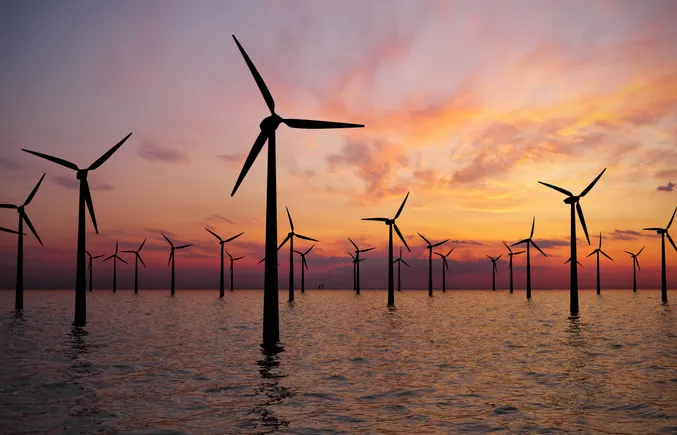
When President Biden took office in 2021, he pledged to pursue the most ambitious climate, environmental, and clean energy agenda in American history. Although opinions on its intensity vary, Biden did sign the Inflation Reduction Act (IRA) — the largest climate spending bill in U.S. history. The act attracted hundreds of billions of dollars in private sector clean energy investment and created hundreds of thousands of clean energy jobs. Shortly after Trump won the election in November 2024, President Biden made a historic visit to the Amazon rainforest, becoming the first sitting U.S. president to visit the world's largest rainforest. During the visit, Biden declared that America's "clean energy revolution" was underway and that "no one can reverse it."
The IRA becomes a target for Trump
To pass the IRA, the Biden administration used the budget reconciliation process—a congressional procedure that allows the Senate to fast-track certain federal legislation with a simple majority. This strategy bypassed the Senate filibuster rule, which typically requires a 60-vote supermajority to pass key appropriations bills. Ironically, the second Trump administration is expected to use the same strategy to end or reverse much of Biden's clean energy legacy.
When Biden first took office, Democrats held majorities in both the House and Senate. Similarly, Trump and the Republicans will control both chambers, though with a slim House majority and a more comfortable Senate margin. Republicans plan to use reconciliation to advance Trump's policy priorities, including extending the 2017 Trump-era tax cuts and allocating resources for Trump's immigration policies. Anticipating this attack path, the Biden administration is actively working to commit or "obligate" as much of the IRA's allocated funds as possible for clean energy projects.
Clean energy investment and job creation
The IRA, enacted in August 2022, expanded on the priorities of two major investment bills—the Bipartisan Infrastructure Law and the CHIPS and Science Act. The law directs nearly $400 billion in federal funding to clean energy projects in the form of grants, loan guarantees, and most notably, tax incentives. This includes rewards for developers building clean energy facilities in low-income communities and requirements for businesses to adhere to prevailing labor standards and wage requirements to qualify for certain tax credits.
On the consumer side, the law provides tax rebates of up to $7,500 for families purchasing qualifying new electric vehicles. In fact, since January 2024 alone, more than 150,000 electric vehicles have been purchased thanks to the IRA's EV tax credit. The law also offers tax credits—and in some cases direct payments—for families and small businesses purchasing clean energy technologies such as solar panels and appliances.
Precisely because of the IRA's success nationwide, Trump's attempt to repeal it entirely may face obstacles, including opposition from members of his own party. The IRA, which specifically targets investment in low-income communities, has attracted $265 billion in private sector clean energy and manufacturing investment and created over 330,000 new jobs, most of which are located in Republican-led congressional districts. This may explain why a dozen Republican lawmakers, in an open letter to House Speaker Mike Johnson, urged him to protect key parts of the IRA and support the tax credits that many businesses and families rely on.
Environmental justice and federal sustainability
Although governments often use tax incentives to steer private sector investment toward the public interest, the Biden administration arguably took this to a new level. For example, its Executive Order 14096, "Revitalizing Our Nation's Commitment to Environmental Justice for All," requires coordination within the federal government to assess and mitigate the adverse health and safety impacts of development projects on disadvantaged communities. Biden also launched the Justice40 initiative, aiming to ensure that 40% of the benefits from federal climate and clean energy investments flow to communities historically overburdened by pollution.
Similarly, Biden's Executive Order 14057, "Catalyzing Clean Energy Industries and Jobs Through Federal Sustainability," urges the federal government to "lead by example," achieving a carbon-pollution-free electricity sector by 2035 and a net-zero emissions economy by 2050. To meet these goals, Biden committed to transitioning federal government buildings and vehicles to energy-efficient alternatives. These commitments mark an important step in fulfilling U.S. international obligations under the Paris Climate Agreement. (President Trump withdrew from the agreement shortly after taking office in 2017, and President Biden quickly reversed that decision.)
The road ahead: challenges and opportunities
Given President-elect Trump's opposition to diversity, equity, and inclusion initiatives and progressive policies, there is broad expectation that Biden's environmental justice initiatives may struggle to survive under the new administration. The consensus seems to be that the outgoing president's commitments to achieving a net-zero economy by transforming federal transportation and energy infrastructure may gradually fade.
Despite these predictions, some practical realities may interfere with Trump's desire to radically overhaul existing clean energy policies. Communities and businesses have come to rely on tax incentives, including in many Republican-led states. Additionally, there is a surge in electricity demand driven by data centers, especially for artificial intelligence. Due to AI, U.S. electricity demand—after years of minimal growth—is expected to grow by 2030 at a pace not seen in decades.
In December 2024, the bipartisan House Task Force on Artificial Intelligence found that AI is a critical component of national security. The task force warned that the United States must take measures to ensure the technology is developed and deployed responsibly. This urgent action also includes addressing new challenges to grid reliability and affordability arising from increased electricity demand.
From rejoining the Paris Climate Agreement to pushing the IRA through a Democratic-controlled Congress, President Biden's term achieved several policy victories that boosted the energy sector. Now, as Trump is sworn in for a second term, the durability of these achievements will be tested by time. But no matter how much Trump dislikes the "clean energy revolution," unprecedented electricity demand will provide strong political and logistical support for all forms of power generation, including renewable energy.