
The Critical Role of Data in Post-Disaster Recovery for Small and Medium-Sized Enterprises: The Overlooked Element
When natural disasters such as hurricanes and wildfires strike the United States, policymakers often rely on coarse indicators like the Waffle House Index to assess economic recovery progress. However, these indicators lack granularity and cannot effectively guide resource allocation. This article, through the case of the Fiserv Small Business Index, demonstrates how real-time economic data can reveal recovery disparities across different regions and industries, and emphasizes the critical role of data in accelerating post-disaster recovery and optimizing aid distribution.
Marc DeCourcey is Senior Vice President of the U.S. Chamber of Commerce Foundation, and Vivian Greentree is Senior Vice President and Head of Global Corporate Citizenship at Fiserv, a payments and financial services technology company.
When hurricanes strike the United States, the media often focuses on the "Waffle House Index" — an unconventional metric for measuring storm severity. Known for its rapid recovery after disasters, Waffle House's index tracks which of its 2,015 locations are operating normally, closed, or offering a limited menu.
The index was originally proposed as a joke by former FEMA Administrator Craig Fugate, but its existence reflects a deeper problem: policymakers and disaster recovery teams at local, state, and federal levels lack reliable means to measure the speed of economic recovery in local communities after major disasters, whether wildfires, tornadoes, or hurricanes.
FEMA has made several attempts to build such tools, but has been thwarted by difficult-to-manage data sharing agreements, high data acquisition costs, or a lack of trust in public-private partnerships.
In the absence of data that is both granular and reliable with low latency, policymakers and decision-makers rely on imprecise metrics like the Waffle House Index, anecdotal data, or occasional broad comments from insurance companies about total property damage amounts. While these ad hoc data measures are somewhat helpful, they lack the detail needed to positively impact communities.
At the very moment when businesses and communities need help the most, we need deeper insights.
The value of timely, granular economic data
Unfortunately, according to a 2018 FEMA study,25% of businesses fail to reopen after a natural disaster. The loss of time, wealth, and talent is often too much for these businesses to bear.
However, the impact of natural disasters on businesses varies by geography and industry.
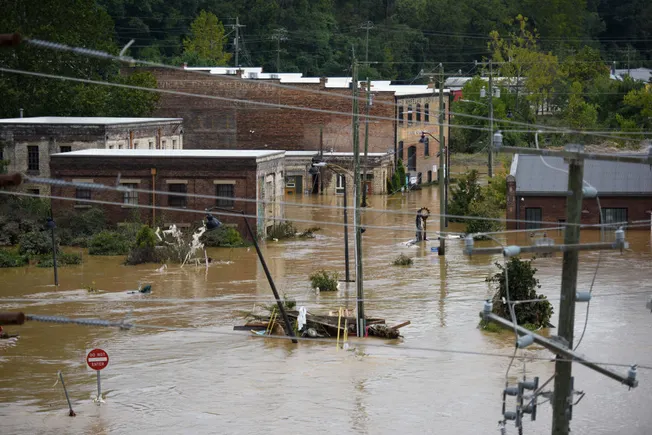
Take last year's Hurricane Helene, for example. It made landfall near Florida's Big Bend region and then cut a destructive path through parts of Georgia, North Carolina, South Carolina, Tennessee, and Virginia.
According to theFiserv Small Business Index(which measures the consumer spending impact of small businesses supported by Fiserv's payment technology), in the first days after the storm made landfall, business activity in Asheville, North Carolina, fell 74% from baseline, and three weeks later was still 28% below baseline.
However, certain industries in the region had not yet recovered to the same level. According to the same index, revenue in the food and beverage industry fell by nearly half from what operators expected, and long-term impacts continued into 2025 as local infrastructure continued to be rebuilt. Many businesses in Asheville have not yet reopened.
In contrast, Augusta, Georgia, experienced a greater initial business downturn during Hurricane Helene's landfall than Asheville, with overall business volume falling nearly 90%. But according to the Fiserv Small Business Index, most industries in Augusta recovered quickly, and three weeks after the hurricane, the region had returned to 98% of pre-storm levels.
Meanwhile, on the West Coast, Los Angeles spent much of 2025 dealing with wildfires that destroyed homes and displaced families. As one might imagine, businesses near such disasters are equally hard hit, whether due to direct damage or the indirect impact of loyal customers leaving town.
According to the Fiserv Small Business Index, the Palisades wildfire reduced local business activity by 43%, leading to a nearly 90% drop in small business sales in January; while the Hurst wildfire, just a few miles away, led to a 15% drop in sales.
Before, during, and after these natural disasters, granular real-time data is extremely valuable. Governments possess highly detailed weather data. How valuable would it be if they also had detailed information about the most affected local economies?
Data also plays a critical role in accelerating recovery — it helps small businesses stay operational and ensures the right assistance reaches the right places in the right order.
Such data can enable government agencies to direct resources or personnel to the regions and industries that need them most, and to tailor loan programs to meet the needs of specific industries. In the long term, this data can inform infrastructure planning, making communities more resilient.
Looking ahead, the U.S. Chamber of Commerce Foundation will use insights on business activity and economic impact, such as the data provided by the Fiserv Small Business Index, to educate decision-makers before, during, and after natural disasters, and to guide targeted disaster response investments, similar to the Chamber's existingSmall Business Hurricane Recovery Grant Program。
The key to recovery: data, funding, and community
Weather-related natural disasters will always exist, and predicting the next affected community is extremely difficult. Investments in climate resilience and disaster recovery must meet the needs of small businesses.
According to a recenteconomic studyby the U.S. Chamber of Commerce Foundation, every $1 invested in resilience building saves $13 after a disaster: $6 from reduced losses and $7 from preserved jobs, income, and economic benefits. The U.S. Chamber of Commerce Foundation's"Resilience Ready" program(supported by Fiserv) educates small business owners on how to prepare for disasters and provides grants when storms strike their regions.
If you agree with the view that "a community never fully recovers until its businesses recover," then quantifying the impact on small businesses is essential. But these investments must be supported by reliable data. Policymakers at all levels of government have unprecedented access to private sector data and should use it.
When small businesses thrive after a disaster, they become anchors for the recovery of the entire community, creating ripple effects that stabilize families, schools, and other community institutions. As weather-related disasters become more frequent and intense, now is the time to build tools to help communities recover faster and stronger. Communities and livelihoods depend on it.