
GHG Protocol Scope 2 Revision Enters Final Stretch: Are Decision-Makers' Voices Being Fully Heard?
The revision of the GHG Protocol's Scope 2 guidance has entered a critical decision-making phase. A survey of nearly a hundred companies shows that proposals by the technical working group, such as narrowing market boundaries and hourly matching, could stifle the development of the voluntary clean energy market.
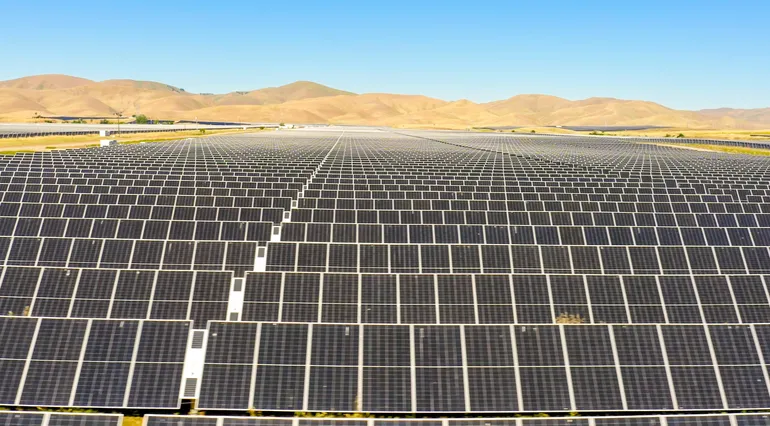
June and July are critical months in the once-a-decade update process for the Greenhouse Gas Protocol's Scope 2 rules, which guide corporate voluntary investments in clean energy. Since the Protocol first released its Scope 2 Guidance in 2015, the private sector response has been robust—corporate investments have driventhe deployment of 100 gigawatts of new renewable energy.
With federal support for clean energy waning and unprecedented growth in electricity demand leading to new fossil fuel power projects, ensuring the continued growth and real-world impact of the voluntary market is a climate imperative. As the accounting system update process enters its decision-making phase, one might expect this climate imperative to place corporate voices—those making decisions and approving investments that drive the voluntary market—at the center of the update process. However, the situation is far from clear.
Evidence that the broad buyer community's voice is not being adequately heard is reflected in some of the leading proposals currently before the Protocol's Technical Working Group, the body responsible for developing the new Scope 2 guidance. Under current Scope 2 rules, companies reduce their Scope 2 inventory by matching their electricity consumption with clean electricity purchased within broad market boundaries on an annual basis. However, the proposals the Technical Working Group is evaluating would replace the current framework with one requiring companies to match their electricity consumption with clean electricity purchases on an hourly basis and only within narrow geographic boundaries (sometimes called "24/7" accounting).
Many companies, thought leaders, and stakeholders (including the authors of this article) recognize that this decade-old Scope 2 guidance needs modernization. Consistent with the overarching goal that the Scope 2 guidance update should aim to sustain voluntary market growth and enhance its real-world impact in reducing fossil fuel emissions, many support, for example, providing better incentives for companies to invest in new clean energy projects and encouraging companies to choose projects located in regions with dense fossil fuel generation.
However, requiring hourly matching and significantly narrowing the geographic scope within which companies can make clean energy investments could stifle the voluntary market.
How do we know this? Earlier this year, the boutique energy consulting firm Green Strategies sent a survey to nearly 100 leading companies active in the voluntary market, asking how potential changes to Scope 2 rules might affect their clean electricity procurement practices. The survey asked how these practices might change under three scenarios aligned with the major stakeholder revision proposals currently under consideration: 1) smaller market boundaries; 2) smaller market boundaries plus hourly matching requirements; and 3) changes in how companies report the actual emissions impact of their transactions. The results are detailed in the report"How Scope 2 Revisions Could Change Clean Electricity Procurement Strategies"。
Scenario 1: Smaller Market Boundaries
The survey points to challenges that adopting smaller market boundaries could bring:
- 70% of respondents indicated that their existing procurement contracts would no longer qualify under stricter, smaller market boundaries (such as balancing authorities or bidding zones).
- Among respondents operating in areas without retail choice, the vast majority believe procurement would become more difficult.
- In areas without retail choice and without wholesale markets, 65% of respondents said procurement would become significantly more difficult, and another 9% said it would become moderately more difficult.
- In areas without retail choice but with wholesale markets, 40% of respondents said procurement would become moderately more difficult, while 40% said it would become significantly more difficult.
Scenario 2: Smaller Market Boundaries with Temporal Matching
While hourly matching could indeed increase demand for reliable, dispatchable clean resources that can meet energy needs at any time, the combination of hourly matching with narrow geographic scope is seen as detrimental to corporate procurement.
- Nearly 80% of respondents lacked confidence in their ability to procure temporally matched clean electricity within smaller market boundaries.
- About two-thirds of respondents expressed interest in increasing procurement of clean electricity from reliable and dispatchable resources, but reported varying degrees of cost sensitivity.
Scenario 3: Better Accounting for Impact
The actual emissions impact of clean energy transactions is not accounted for under current Scope 2 rules. The survey indicates that adding new impact disclosure options would provide incentives for companies to enhance their grid decarbonization impact.
- About 60% of respondents said that flexibility to procure beyond limited market boundaries would enable them to increase the carbon reduction impact of their clean electricity procurement in ways that would otherwise not be possible.
- A majority of respondents (70%) already include additionality requirements or preferences in their procurement strategies, or would add such requirements if broad market boundaries were maintained and avoided emissions calculations were recommended for additional procurement.
The disconnect between what the Protocol's working group is proposing and the views of stakeholders making necessary clean energy investment decisions in the voluntary market suggests we may be on the wrong track. In the coming critical months, these voices must be heard—and heeded.