
Can the food industry's full bet on regenerative agriculture convince farmers to follow?
The food industry is vigorously promoting regenerative agriculture (carbon farming) to address soil degradation and carbon emissions. Companies such as Indigo Ag and Bayer are positioning themselves in carbon credits, while startups like Pivot Bio are developing biological fertilizers. However, transition costs, delayed returns, and a lack of standards are major obstacles, and whether farmers are willing to participate remains crucial.
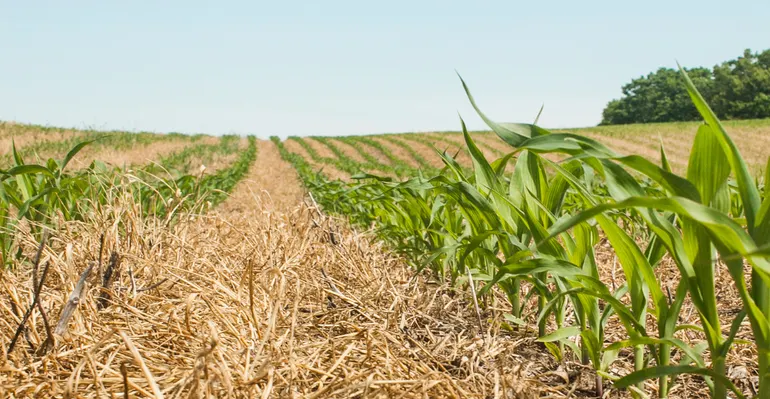
In response to the increasingly severe problems of soil degradation and excess carbon in the atmosphere, companies in the agricultural sector are attempting to provide a dual solution: sequestering carbon in the soil.
This practice, known as "carbon farming" or "regenerative agriculture," is natural and ancient. As the term and practice increasingly become central to sustainability goals in the food industry, a wave of new companies is emerging, hoping to profit from this booming business.
Acting as a bridge between farmers and organizations seeking to offset their carbon debt, companies such as Indigo Ag, AgriProve, Nori, Truterra, and Bayer are defining the carbon credit industry and fostering partnerships that allow regenerative practices to scale and have an impact. Meanwhile, startups like PivotBio, Pluton Bio, and Locus Agriculture are working to develop more sustainable fertilizer alternatives, enabling farmers to achieve yields equal to or even higher than those from synthetic chemicals.
However, to succeed, this emerging industry must convince farmers that regenerative agriculture is not only good for the environment but also profitable.
"Sustainability starts with profitability," said Chad Pawlak, former CEO of Locus AG, an alternative fertilizer manufacturer that also runs its own carbon credit program. "If growers don't have the opportunity to reinvest in their operations... it's difficult for them to scale up to regenerative agricultural practices."
Cultivating Regenerative Ecosystems
From biological fertilizers to carbon credit programs, startups and large corporations are racing to enter this emerging industry centered on changing the way farmers operate.
Biological fertilizer companies have secured hundreds of millions of dollars ininvestor fundingand have partnered with some of the world's largest agricultural companies to bring more sustainable crop protection products to market. Some startups are themselves becoming major players—microbial producer Pivot Bio is planning a large-scale manufacturing expansion, and its revenue has alreadysurpassed the $100 million mark。

Alternative fertilizers play a key role in regenerative agriculture by reducing reliance on chemicals and pesticides, promoting microbial diversity and nutrient cycling, thereby nurturing naturally fertile soil systems.
"Soil can do two things," said Barry Goldman, Chief Scientific Officer at Pluton Bio, which is developing a microbial "cover crop" that can be sprayed on fields to capture carbon and nitrogen. "It can be a sink for carbon while also nourishing the land, so you can get more food from the soil."
Despite the claimed benefits of regenerative agriculture, getting farmers accustomed to conventional farming methods to adopt it is not easy. The industry also needs to ensure that farmers stick with regenerative methods after making the transition.
To this end, many biological fertilizer companies have created carbon credit programs that incentivize farmers to shift to regenerative practices by paying them. Of the 10 agricultural and forestry carbon offset projects created in the past five years, nearly half were initiated by companies in the fertilizer or biological fertilizer industry.
Carbon credit programs promise a new source of revenue for farmers and project operators. Farmer earnings from these programs vary depending on the practices adopted and farm size, but the typical range is $30 to $40 per carbon credit. According toIndigo Ag's carbon calculator, a farmer in Iowa City with 1,400 acres (aboutthe average size of a large family farm) who plans to reduce tillage and plant or improve cover crops could expect to earn $44,881 over the first five years. Income increases over time as companies look for farmers' commitment to regenerative practices.
"Farmers will see improvements in plant vigor, growth, yield, and profitability. But it certainly doesn't happen overnight."

Chad Pawlak
Former CEO of Locus AG
However, some carbon credit programs are shifting to model-based approaches to assess soil carbon levels rather than using measurement-based methods. This lower-cost way of assessing land carbon content to create carbon credits has created ambiguity in the carbon market.
For smallholder farmers facing large competitors, regenerative agriculture offers a new way to add value to crops, especially as climate change and high input costs erode producer profits.
"They have fields that are depleted," Goldman said. "So some growers ask, how do I make this land valuable again? Regenerative agricultural practices are starting to come to the forefront."
Addressing Barriers to Scaling
Althoughregenerative agriculture has been provento provide the same output as conventional agriculture, there is a one-to-two-year transition period during which yields temporarily decline. While long-term profits can grow by 120%, the short-term financial investment can cost farmersup to $40 per acre。
Beyond transition costs, farmers who have used the same practices for generations have broader concerns about completely changing course, especially in areas lacking strong expert guidance.
"If you're going to take someone out of their comfort zone, there's usually a learning curve or training," said Locus Ag's Pawlak. "Once mastered, profitability does increase, and farmers will see improvements in plant vigor, growth, yield, and profitability. But it certainly doesn't happen overnight."

Not only is there a temporary lag in yields, but returns also take time. Most carbon projects only allocate credits after independently verifying the activities carried out. Therefore, producers may have to waitup to two yearsto receive compensation. This delay requires farmers, ranchers, and forest owners to adopt practices at their own expense and may leave them without adequate compensation to offset these expenditures for a long time.
Pawlak cited the main incentives for transition: overall efficiency, farm sustainability, and the ongoing reduction of available water for agriculture, making maximizing resource use an increasingly urgent need.
But as demand for carbon credits and regenerative agricultural methods increases, lax regulation and a mix of metrics and definitions make scaling efforts difficult. The private sector has filled the gap in definitions and standards, leading to consumer confusion and accusations of corporate "greenwashing."
Carbon credit distributors say that without federal support, projects cannot scale. For example, Australia requires that regenerative agricultural practices be approved by regulators, and the country has a more unified approach to measurement and modeling, which gives it more credibility.
"Soil can do two things. It can be a sink for carbon while also nourishing the land, so you can get more food from the soil."
Barry Goldman
Chief Scientific Officer, Pluton Bio
"If the model doesn't work or is questioned, then suddenly buyers of all these credits get accused of greenwashing," said Duncan Farquhar, Regional Operations Manager at AgriProve, Australia's leading soil carbon project developer.
Australia's model also addresses another major concern in the regenerative industry—that farmers may revert to conventional methods when sustainable practices are no longer profitable. The country requires regenerative agricultural projects to keep carbon in the soil for at least 25 years, up to 100 years.
For AgriProve, landowners must sign contracts of at least 25 years and include a 20% fee that farmers pay for reversal risk, set aside from proceeds as a "contingency fund" in case they default on the deal. Additionally, a minimum land requirement of 40 hectares is in place to mitigate disproportionately high transaction costs.
Back in the United States, carbon credit developers say federal support and subsidies would greatly stimulate demand and drive comprehensive change in agriculture.
"One of the incentives driving growers to plant corn and soybeans is subsidies," Goldman said. "We don't have subsidies for pulling carbon out of the atmosphere, but this is a problem that clearly affects us all."