
Net Zero in the U.S. Is Still Possible: Three Ready-Made Solutions Explained
As COP28 convenes, whether the United States can achieve its net-zero emissions goal by 2050 has become a focal point. Research from the ICF Climate Center indicates that with existing technologies, the U.S. can cut nearly 90% of emissions, with the key lying in scaling up electric vehicles, comprehensively retrofitting buildings, and expanding the share of clean energy. However, this path faces practical obstacles such as battery supply chains, grid expansion, and slow building retrofits, requiring coordinated efforts from government, businesses, and the public.
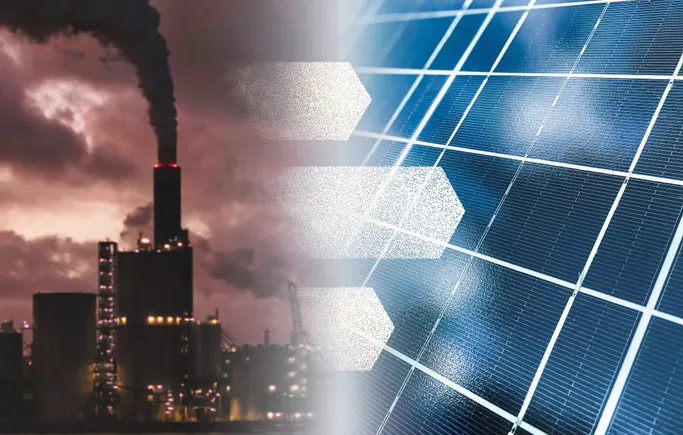
As the COP28 climate conference convenes, global leaders are focusing on how to achieve the Paris Agreement's goal of limiting global warming to 1.5°C. The scale of this challenge is difficult to fathom—even the United States, with its economic strength, scientific knowledge, and innovation leadership, faces significant challenges in meeting its climate goals.
In the United States, the Bipartisan Infrastructure Law and the Inflation Reduction Act will indeed reduce greenhouse gas emissions. Together, these two laws provide the largest federal investment in U.S. history to advance clean energy and decarbonization and address climate impacts. However, multiple studies show that these laws can only take the U.S. part of the way toward achieving a net-zero economy by 2050.
So, what does truly achieving net zero require? We explored this question ina new study. The results shown by the data even surprised us.
The United States can reduce greenhouse gas emissions by nearly 90% by 2050 without relying on any "Hail Mary" breakthrough innovations. Three solutions that already exist today can almost get us there: transportation electrification, building decarbonization, and clean energy.
Transportation Electrification
As of the end of 2022, there were about 2 million electric vehicles on U.S. roads. Increasing EV adoption by 100 times to about 240 million vehicles could put the U.S. on track for net-zero emissions by 2050. While this number sounds daunting, it is only about 2.5 times the currently projected EV fleet size by 2050.
To achieve large-scale transportation electrification, the battery manufacturing industry will need to expand significantly. Building the battery supply chain requires access to new mineral resources located primarily outside the United States. Automakers and other stakeholders will also need to find ways to continuously stimulate consumer demand for EVs. If EV demand falls short in the coming years, transportation electrification as a decarbonization strategy will be far less effective.
The U.S. will also need to expand the scale of public charging stations. Utility companies will need to expand grid capacity to support the additional EVs while implementing complex electricity load management strategies to maintain grid reliability.
Building Decarbonization
There are approximately 110 million buildings of various sizes and types in the United States. To maximize building decarbonization potential, nearly all U.S. buildings will need some form of energy efficiency improvement or electrification measure by 2050. In total, more than 1 billion decarbonization measures will need to be installed in buildings.
These measures include relatively low-cost options such as lighting upgrades, sealing air leaks, and installing weatherstripping around doors and windows, but also more expensive ones like efficient appliances, HVAC systems, deep energy retrofits, and converting entire buildings from natural gas to electricity.
Although economic incentives (such as those in the Inflation Reduction Act) can accelerate building decarbonization, this transition is extremely complex. For example, buildings are replaced very slowly. About 5% of cars are replaced each year, but only a very small percentage of buildings undergo major renovations or demolition annually. This means that decarbonizing existing buildings may naturally proceed in a piecemeal fashion.
Clean Energy
Even with the current mix of U.S. power generation resources, electrifying transportation and buildings can reduce greenhouse gas emissions. However, when electrification is combined with clean electricity such as solar and wind power, the emission reduction effect is significantly enhanced. In other words, a low-carbon electricity sector is a foundational solution that amplifies decarbonization across the entire U.S. economy.
Even with abundant solar panels and wind turbines, the sun doesn't always shine and the wind doesn't always blow. To establish a balanced and reliable renewable electricity supply, energy storage capacity such as batteries will need to increase from negligible levels in 2022 to hundreds of gigawatts by 2050. Overall, the U.S. will need to increase the share of renewable energy generation to 85% of total electricity generation by 2050.
At the same time, the U.S. will need to reduce the share of electricity generation from natural gas, coal, and other unabated fossil fuels from 60% in 2022 to near zero by 2050. By 2050, more than 85% of U.S. electricity generation capacity will come from renewable wind, solar, and hydro resources, with the remainder from low-carbon or zero-carbon resources.
Just as a clean grid is a key enabler for other decarbonization strategies, clean energy in the form of low-carbon fuels (such as renewable natural gas and hydrogen) also plays an important role in driving emission reductions across various industries.
The Way Forward
The scenario we outline to put the U.S. on a path to a net-zero economy is feasible, but it is not the only path. If the U.S. adopts this scenario, it will require significant emission reductions, which will raise complex challenges, financial costs, and trade-offs. The federal government, utility companies, state and local governments, non-governmental organizations, community organizations, the American public, and the private sector will all need to play a role in achieving a net-zero economy while maintaining energy reliability, enhancing energy resilience, mobilizing financing, and ensuring equity, among other national priorities.
As COP28 progresses, it is crucial to maintain a clear-eyed understanding of the costs and complexities of transitioning to a net-zero economy. But by navigating this intricate web, the U.S. and other countries can weave a future that avoids the worst impacts of climate change.