
Who Bears the Cost of Supply Chain Decarbonization?
Approximately 75% of global greenhouse gas emissions fall under Scope 3, and supply chain decarbonization is costly, requiring an additional $3.5 trillion annually. Buyers and suppliers disagree on cost-sharing, with some companies using green bonds and supply chain finance to incentivize emission reductions, but many suppliers still face financial pressure.
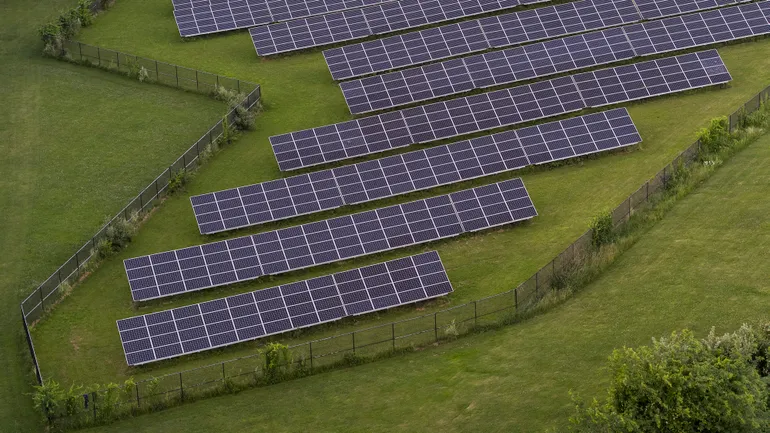
To achieve global decarbonization, the decarbonization of supply chains must be rapidly advanced.
According toCDP technical note, approximately 75% of greenhouse gas emissions fall under Scope 3, covering upstream supply chains as well as the end-use of a company's products and services.
Reducing these emissions to avoid catastrophic climate change requires technology, infrastructure, operational changes—and capital.
According to McKinsey's 2022 estimates, the total cost of the global transition to net zero could increase annual capital expenditures by an additional$3.5 trillion, roughly half of total global corporate profits.
As more companies seek to reduce their supply chain carbon footprint, the question of who will pay for the necessary changes—buyers or suppliers—will become increasingly urgent. Even the world's wealthiest brands are discovering the real costs of supply chain decarbonization.
"The internal investment in decarbonization activities varies enormously across organizations," said Simon Geale, Executive Vice President of Procurement at consulting firm Proxima. "It's not just suppliers grappling with 'how do I pay for this?'—organizations themselves are grappling with it."
While some large brands are investing to help suppliers reduce emissions, others may simply be passing the problem—and its costs—onto suppliers to solve on their own.
In industries such as fashion, these suppliers already face thin operating margins. "Without cash flow, how can they invest? Cash flow is the issue," said Chana Rosenthal, Principal at reDesign Consulting. "It makes investing in green technologies difficult."
The 'biggest hurdle' in climate action
In many companies, cost control—rather than carbon reduction—remains thetop priority。
In a study by Efficio this year, only one-third of surveyed executives and managers said they were "very confident" in achieving carbon reduction targets. The research showed that cost control remains the primary responsibility for procurement leaders, ranking above other duties including sustainability.
According to GEP's survey of executives this year, cost reduction is also the primary driver even in environmental reduction investments.
"Behind closed doors, many CFOs will say: 'I know it has to be done, but when?' because there's an immediate cost, not an immediate return," Geale said regarding supply chain emissions action.
Unfortunately, for humanity and other life on Earth, the climate is indifferent to budget plans and profit targets. According to the UN's Intergovernmental Panel on Climate Change (IPCC), the world needs to reduce greenhouse gas emissions by43%by 2030 to avoid the most extreme consequences of climate change.
"Behind closed doors, many CFOs will say: 'I know it has to be done, but when?' because there's an immediate cost, not an immediate return."
—Simon Geale, Executive Vice President of Procurement at Proxima
Scope 3 emissions, particularly those related to supply chains, pose a particularly formidable challenge and cost burden. Simply understanding the scope of a carbon footprint requires time, data, and often technical support—all of which require funding. Because these emissions occur outside a company's direct control, they are the most expensive to track and often constitute the largest portion of most carbon footprints.
"The biggest hurdle is Scope 3," said Jackie Sturm, Vice President of Global Supply Chain Operations at Intel, in an interview with Supply Chain Dive earlier this summer. "If you look at Scope 1 and 2, we've already moved to renewable energy—long before it became trendy." In 2022, Intel's operations in the U.S. and Europe used 100% renewable energy, and the company aims to achieve 100% renewable energy use globally by 2030, according to its corporateresponsibility report。
"But extending that to our supply chain is challenging because, as a semiconductor company, we use nearly every element on the periodic table."
For Intel, the scale of its climate footprint is tied to the extraction of various minerals, each with its own associated emissions. Reducing this footprint requires a vast toolbox, including data collection, selecting more sustainable materials, and working with suppliers to understand how much of their carbon footprint is inherent to production and what measures they are taking to reduce it.
Sturm said some carbon reduction efforts may pay for themselves over time through operational changes that improve efficiency or lower energy costs. "How do I reduce consumption? How do I switch to greener chemicals? How do I source more regionally rather than shipping across oceans?"
For suppliers that can afford it, they may have their own incentives to invest in emissions reduction, especially in consumer goods sectors where consumers increasingly prefer sustainable products.
"We're generally finding that, at least in our industry, suppliers are viewing climate as a competitive advantage and are truly investing in their own value chains," said Nancy Mahon, Chief Sustainability Officer at The Estée Lauder Companies, at an Economist Impact conference in Washington, D.C. earlier this year.
But many suppliers may lack the resources to invest without help.
How to get CFOs interested in cutting Scope 3
Finance departments may be able to bridge, to some extent, the gap between global environmental requirements and corporate financial goals, as well as the divide between buyers and suppliers on emissions reduction.
For CFOs, "what really lights them up is the idea of getting more favorable financing rates through better green performance, and I think that's very interesting," Geale said.
Key data
- $3.5 trillion: additional annual capital expenditure needed to achieve the globalnet zerotransition.
- 75%: share of greenhouse gas emissions from Scope 3, including supply chains.
- 33%: share of executives in Efficio's survey who were confident in achievingemission reduction targets.
In recent years, thegreen capital market has expanded rapidly. Investors can fund the climate transition through so-called green bonds and other lending instruments.
These instruments can finance environmentally friendly projects. For example, Apple announced last year the issuance of$4.7 billion in green bondsto "drive innovative development of low-carbon manufacturing and recycling technologies," including carbon-free aluminum for its products, as the computing giant works toward acarbon-neutral supply chain。
by 2030. Walmart, the world's largest retailer, announced in 2021 the issuance of its "first-ever"$2 billion green bond, with part of the proceeds going to waste reduction and sustainable transportation projects in its supply chain. To date,projects include partnering with tire supplier Apache Millsto convert scrap tire material into heavy-duty commercial entry mats sold at its Sam's Club stores.
Walmart is also helping suppliers decarbonize through asupply chain finance programlinked to environmental goals. Launched in late 2021 and touted as an "industry first," the program, provided by HSBC, offers more favorable financing terms to suppliers that achieve science-based carbon reduction targets aligned withWalmart's 'Project Gigaton'. The program aims to cut one billion metric tons of emissions from its supply chain by 2030.
In effect, large retailers like Walmart can leverage their solid credit ratings to secure cheaper financing and faster payments for suppliers, using this as a carrot to incentivize emissions reduction.
"When we present these kinds of programs to CFOs, they say: 'Of course, if we can get more capital, that's great,'" said Eric Fisch, Head of Retail and Apparel at HSBC's U.S. Commercial Banking. "Then we present to chief sustainability officers, and they say: 'This is fantastic, I want to do it.'"
These programs can also fund certain supplier projects to support their environmental and carbon reduction initiatives.
The selection of supplier projects is still being fine-tuned, and Fisch noted that such programs can fund a limited number of projects. "If you did this for every supplier, you'd spend a lot of money very quickly," he said.
Outsourcing sustainability to suppliers
Whatever the utility and limitations of such financing programs, they are far from universal.
For many suppliers, especially those in low-margin industries like apparel, buyers' Scope 3 targets are just anotherdemanding requirementand cost imposed by the powerful brands they depend on. "You're increasingly putting all the pressure on suppliers," Rosenthal noted, referring to the history of outsourcing manufacturing and other functions beyond large consumer brands. In this model, sustainability can also be outsourced.
"You're increasingly putting all the pressure on suppliers."
—Chana Rosenthal, Principal at reDesign Consulting
Some apparel manufacturers have reported such situations. In astudyco-authored by Rosenthal with Natasja Sheriff Wells for NYU Stern's Center for Business and Human Rights, some manufacturers in Bangladesh reported that "expensive new environmental requirements to reduce water use and carbon emissions" exacerbated their economic pressures. The report noted that brands often refuse to incentivize these requirements through financial benefits.
However, suppliers may indeed have an interest in reducing their carbon footprint. "We talk to many suppliers about renewable energy, and they're all interested—at least those we've engaged with—but it's not easy. It takes time and money," Rosenthal said.
Complicating matters, buyers' environmental requirements are constantly changing and often vary from buyer to buyer. "The difficulty for some suppliers is that they invest in a technology, then new requirements emerge, and they have to invest again," Rosenthal said.
Across industries, there are various approaches, some more conducive than others to working with financially strained suppliers.
"I've seen companies say to suppliers: 'This is my target—comply or be out. If you can't reduce emissions to my target, I'll kick you out.' That's a particularly harsh and ineffective way to manage a decarbonization program," said Geale of Proxima.
Geale added: "I've also seen organizations say: 'Let's take a more structured approach to supplier engagement. Let's understand where you are, how we can help you, whether we can unlock financing solutions for you, and be more collaborative.'" HSBC's Fisch said he expects the costs of the carbon transition will ultimately be shared in some way among suppliers, buyers, and consumers. He cited the historic inflation period triggered by supply chain disruptions in 2021, which came with a "collective sharing of cost inflation."
"Part of the cost was absorbed by factories, then wholesalers took on a portion, retailers took on a portion, and ultimately prices rose to some extent," Fisch said of the inflation. "It became a collective burden. I think any climate-related transition will be the same."
According to Rosenthal, a simple way to help suppliers finance the transition might be good procurement practices, such as on-time payments and committed purchasing.
"If you truly want to decarbonize, you have to start there, giving them the ability to fix their business. Engage with them, understand their needs," Rosenthal said.
